🗳️ KWALE 2027: THE POLITICAL STORY BEHIND THE NUMBERS!
Kwale's voters did not vote uniformly along party lines in 2022. Their choices differed across presidential, gubernatorial, parliamentary and ward elections. As new political movements emerge and existing parties reposition themselves ahead of 2027, one question deserves attention:
By UshindiOS Editorial Team · · 6 min read
Kwale 2027: The Political Landscape Behind the Numbers
Election Intelligence | 22 October 2026 | UshindiOS
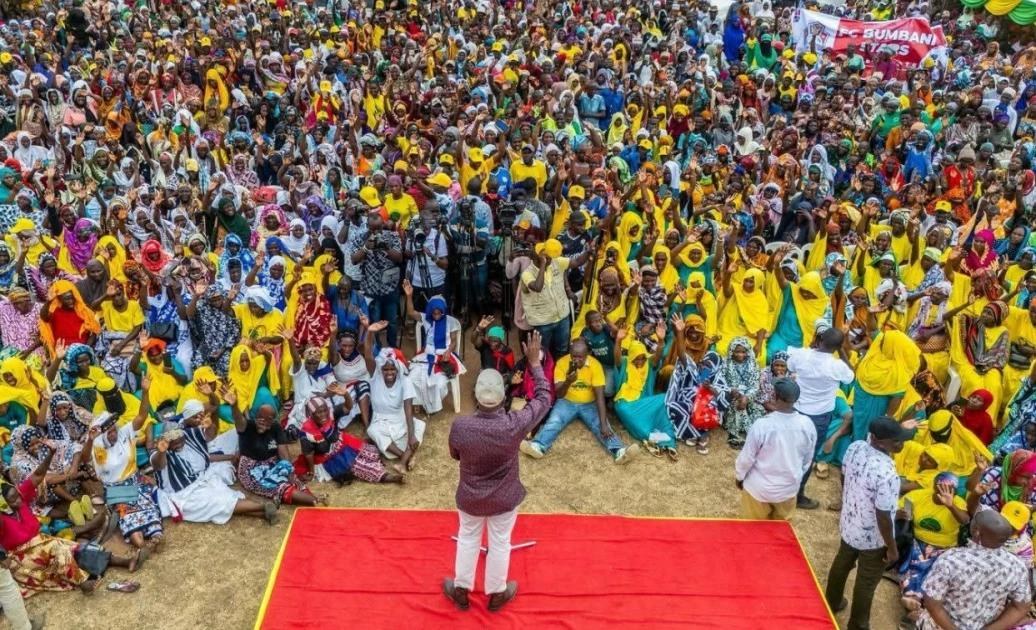
As the Linda Mwananchi movement prepares to visit Kwale County on 31 October 2026, attention is turning to the county’s political future. The visit, associated with Nairobi Senator Edwin Sifuna, comes amid changing political alliances and preparations for Kenya’s August 2027 General Election.
Yet Kwale’s political story cannot be understood through rallies and party affiliations alone. In 2022, Kwale delivered a substantial presidential majority to Raila Odinga but elected a UDA governor. ODM won the Senate and Woman Representative positions, while the four parliamentary constituencies elected MPs from four different parties. These contrasting outcomes make Kwale a useful case study in cross-ballot voting.
1. A Visit Amid Political Realignment
The planned October 31 visit follows earlier engagements involving Sifuna and local political figures. Debate continues over ODM’s political direction and relationships among national parties. The gathering may clarify the movement’s agenda and local leadership, but rally attendance and endorsements cannot establish the preferences of all Kwale voters. For that, representative polling is necessary.
The historical record provides a more concrete starting point. UshindiOS publishes results by elective office and territory, making it possible to compare countywide races with parliamentary and MCA contests.
2. Presidential Votes and the County-Level Contrast
In the August 2022 presidential election, Raila Odinga received approximately 125,541 votes in Kwale against William Ruto’s 51,918 votes—a difference of 73,623.
Candidate | Votes | Approximate share |
Raila Odinga | 125,541 | 70.1% |
William Ruto | 51,918 | 29.0% |
Presidential vote comparison (2022)
Raila Odinga ████████████████████████████ 125,541
William Ruto ████████████ 51,918
Despite this presidential result, voters elected Fatuma Achani of UDA as governor. This does not prove that individual voters switched their preferences between ballots; it establishes that aggregate outcomes differed across offices. Candidate-specific factors and local contests matter, and presidential results should not be used as a proxy for other races.
3. The Governor’s Race: A 5,702-Vote Margin
The UshindiOS Kwale Governor profile records 59,674 votes for Fatuma Achani and 53,972 for ODM’s Hamadi Boga. Published candidate-level results also report 47,639 votes for independent Chai Mangale.
Candidate | Party | Votes |
Fatuma Achani | UDA | 59,674 |
Hamadi Boga | ODM | 53,972 |
Chai Mangale | Independent | 47,639 |
Winning margin over runner-up: 5,702 votes.
Achani ████████████████████ 59,674
Boga ██████████████████ 53,972
Mangale ████████████████ 47,639
UshindiOS reports approximately 328,052 registered voters, 178,999 votes cast and 54.6% turnout. Achani’s reported vote share was approximately 33.4%, illustrating a plurality victory in a multi-candidate contest. These figures describe 2022 and cannot predict 2027. Registration totals vary across some published datasets and should be reconciled with official IEBC records.
Source: https://ushindios.com/elections/governor/kwale
4. Four Constituencies, Four Parties
Kwale’s 2022 parliamentary results were notably varied. Each constituency elected an MP from a different party.
Constituency | Elected MP | Party | Votes | Margin |
Kinango | Rai Samuel Gonzi | PAA | 16,331 | 3,306 |
Lungalunga | Chiforomodo Mangale Munga | UDM | 15,267 | 5,682 |
Matuga | Tandaza Kassim Sawa | ANC | 17,841 | 8,705 |
Msambweni | Bader Salim Feisal | UDA | 22,559 | 9,374 |
Parliamentary winning margins (2022)
Kinango ███████ 3,306
Lungalunga ████████████ 5,682
Matuga ███████████████████ 8,705
Msambweni ████████████████████ 9,374
In Kinango, UshindiOS records Rai Samuel Gonzi’s 16,331 votes as approximately 30.4% of votes in the constituency MP race. The platform also reports 98,123 registered voters and 55.0% turnout. The constituency results illustrate how multi-candidate contests can produce different winning shares and margins. None of these 2022 figures establishes present support for any party.
Sources:
• Kinango: https://ushindios.com/elections/mp/kinango
• Lungalunga: https://ushindios.com/elections/mp/lungalunga
• Matuga: https://ushindios.com/elections/mp/matuga
• Msambweni: https://ushindios.com/elections/mp/msambweni
5. ODM’s Two Countywide Seats
ODM won the Senate and Woman Representative seats despite losing the governorship.
Office | Elected candidate | Party | Votes |
Governor | Fatuma Achani | UDA | 59,674 |
Senator | Issa Juma Boy | ODM | 52,772 |
Woman Representative | Fatuma Hamisi Masito | ODM | 58,820 |
The split demonstrates the limits of describing Kwale through a single party label. Different offices had different candidates, campaigns and results. A careful reading of the electoral record should keep these races distinct.
Sources:
• https://ushindios.com/elections/senator/kwale
• https://ushindios.com/elections/woman-rep/kwale
• https://ushindios.com/elections/governor/kwale
6. The 20 Wards: Local Contests, Different Margins
Kwale has 20 county assembly wards distributed across Kinango (7), Matuga (5), Msambweni (4) and Lungalunga (4). Ward-level MCA results reveal local electoral differences that disappear in countywide summaries.
Ward | Constituency | 2022 winning margin |
Kasemeni | Kinango | 207 |
Kubo South | Matuga | 276 |
Chengoni/Samburu | Kinango | 320 |
Dzombo | Lungalunga | 1,217 |
Gombato Bongwe | Msambweni | 1,876 |
These selected examples are not a ranking of all 20 wards. Kasemeni’s margin of 207 votes and Gombato Bongwe’s margin of 1,876 reflect different historical MCA contests. A close result in 2022 is not evidence that the next contest will also be close.
Sources:
• https://ushindios.com/elections/mca/kasemeni
• https://ushindios.com/elections/mca/kubo-south
• https://ushindios.com/elections/mca/chengonisamburu
• https://ushindios.com/elections/mca/dzombo
• https://ushindios.com/elections/mca/gombato-bongwe
7. Questions for the 2027 Election Cycle
National alliances and local nominations. How will cooperation or competition among national parties affect candidate selection in Kwale? Historical results demonstrate that party outcomes can differ between presidential, countywide and constituency races, but they do not establish the effect of any future alliance.
The incumbent administration’s record. Public debate can examine education financing, healthcare delivery, water access, agricultural programmes, roads, markets and implementation of county budgets. These questions are best evaluated through official records, independently documented outcomes and public participation.
New political movements. Linda Mwananchi’s visit introduces another opportunity for residents to hear policy positions and ask questions. Its organizational development and relationships with existing parties remain subjects for reporting. Crowd size should not be confused with a statistically representative measurement of support.
Registration and turnout. UshindiOS records varying historical turnout rates across constituencies. Changes in registration and actual participation will affect the number of ballots cast in 2027, but turnout alone says nothing about how those ballots will be distributed among candidates.
8. Public Policy Beyond the Political Rallies
Kwale’s development agenda is broader than electoral competition. Residents have an interest in whether education support reaches eligible students, whether health facilities are adequately equipped, and whether water and transport investments meet documented needs. Tourism-related employment, agricultural livelihoods and opportunities for small businesses also warrant examination.
The relevant evidence includes county budgets, implementation reports, public participation records, procurement documents and independently verified service-delivery information. Political statements can be compared with these records, without assuming that any one issue determines how residents will vote.
9. What the Polls Do—and Do Not—Tell Us
No publicly accessible, methodologically documented Kwale-specific opinion poll for the 2027 election was verified for this article. That means current levels of support for Linda Mwananchi, ODM, UDA or individual aspirants cannot be quantified from the evidence presented here.
A credible poll should identify its fieldwork dates, target population, sample size, sampling method, question wording and statistical limitations. Historical election results are not a substitute for current opinion research. Nor are rally attendance, online engagement or political endorsements.
10. Explore Kwale’s Electoral Record on UshindiOS
UshindiOS makes historical election profiles accessible by office and territory. Readers can examine candidates, parties, votes, winning margins, registered voters and reported turnout. The public results pages support comparisons across governor, Senate, Woman Representative, MP and MCA elections.
Some platform calculations apply historical turnout rates to voter-registration baselines. Such calculations are illustrative scenarios, not opinion polls or forecasts. Their assumptions should always be visible.
Start with the county directory, then follow the relevant office and constituency links:
• Kwale County: https://ushindios.com/elections/county/kwale
• Governor: https://ushindios.com/elections/governor/kwale
• Senator: https://ushindios.com/elections/senator/kwale
• Woman Representative: https://ushindios.com/elections/woman-rep/kwale
• Kinango MP: https://ushindios.com/elections/mp/kinango
• Lungalunga MP: https://ushindios.com/elections/mp/lungalunga
• Matuga MP: https://ushindios.com/elections/mp/matuga
• Msambweni MP: https://ushindios.com/elections/mp/msambweni
Conclusion: A County That Cannot Be Reduced to One Party
Ahead of Linda Mwananchi’s planned October 31 visit, Kwale’s 2022 electoral history offers a clear lesson in the value of examining each ballot separately. Raila Odinga received a substantial presidential majority; UDA won the governorship; ODM secured the Senate and Woman Representative seats; and four parties won the parliamentary contests. Individual MCA races showed further variation.
These are established historical outcomes, not a forecast of the next election. As candidates and movements prepare for 2027, residents can compare policy proposals, assess public records and scrutinize claims using documented evidence.
Explore the numbers behind Kwale’s elections. Visit the UshindiOS Kwale County Election Directory to review results for the county, constituencies and wards.
—————
About UshindiOS: UshindiOS is a Kenyan electoral intelligence and election-planning platform providing historical results and territory-based analysis: https://ushindios.com
Data note: Results refer to August 2022, not current voter preferences. Published registration totals may differ by source; reconcile them against official IEBC records before treating the dataset as definitive. The planned October 31 visit is a forthcoming event as of the publication date.